Summary:
- Engagement and wedding rings mark different stages of commitment. Some couples choose both, while others choose only one, depending on what feels necessary rather than what tradition dictates.
- Traditionally, the wedding band sits closest to the heart, with the engagement ring worn above it on the same finger.
- Matching a wedding ring to an engagement ring comes down to metal, profile, and fit. Some settings require a contoured band for a closer fit. When designed together, both rings are created to work in harmony from the start.
Engagement rings and wedding bands are rarely chosen at the same time. They mark different moments in a relationship, and are often designed months or even years apart.
The engagement ring usually comes first, followed by the wedding band, yet they are not separate in practice. Their proportions, profiles, and how they sit together shape how they are worn over time.
This guide looks at the relationship between engagement rings and wedding bands, and what matters when the two are considered as a pair.
The Difference Between Engagement Rings and Wedding Bands
Engagement rings and wedding bands serve distinct roles.
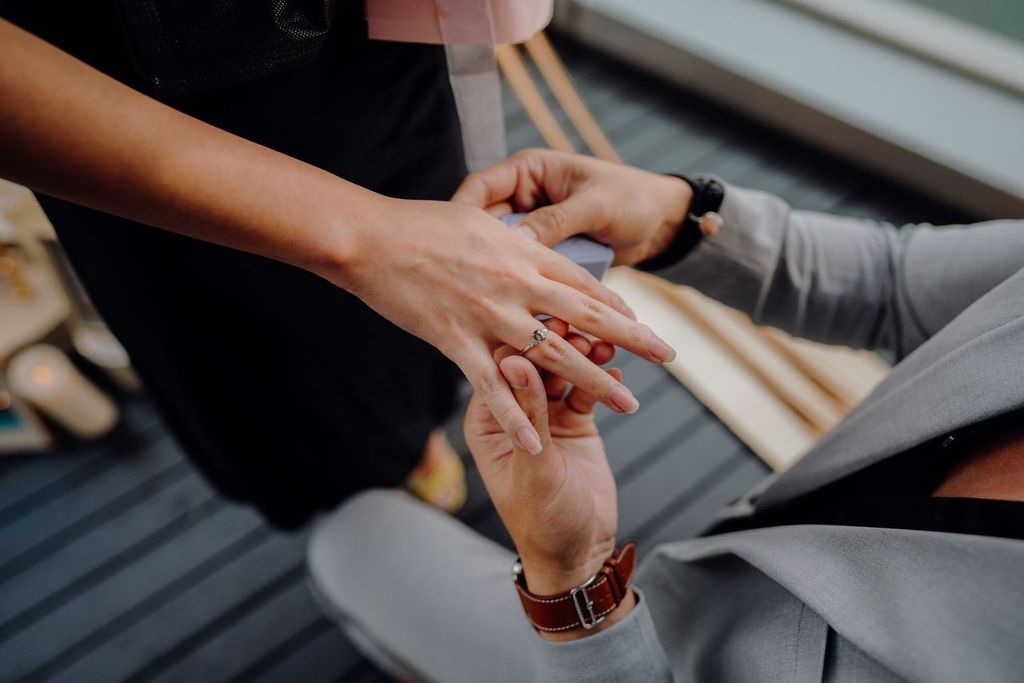
The engagement ring is presented at the proposal and worn from that moment onwards. The wedding band follows during the ceremony, completing the set worn daily.
Though chosen separately, they are not unrelated. Their design, scale, and metal choice affect how they sit together once worn as a pair.
Which Ring Goes First: Engagement or Wedding Ring?
Not every couple chooses to wear both rings.
Some wear both together. Others prefer a single ring: either an engagement ring or a plain wedding band. A small number commission one design intended to fulfil both roles.
In practice, the decision is less about convention than comfort. How the rings feel, sit, and move throughout daily wear often determines the final choice.
How Engagement Rings and Wedding Bands Are Worn
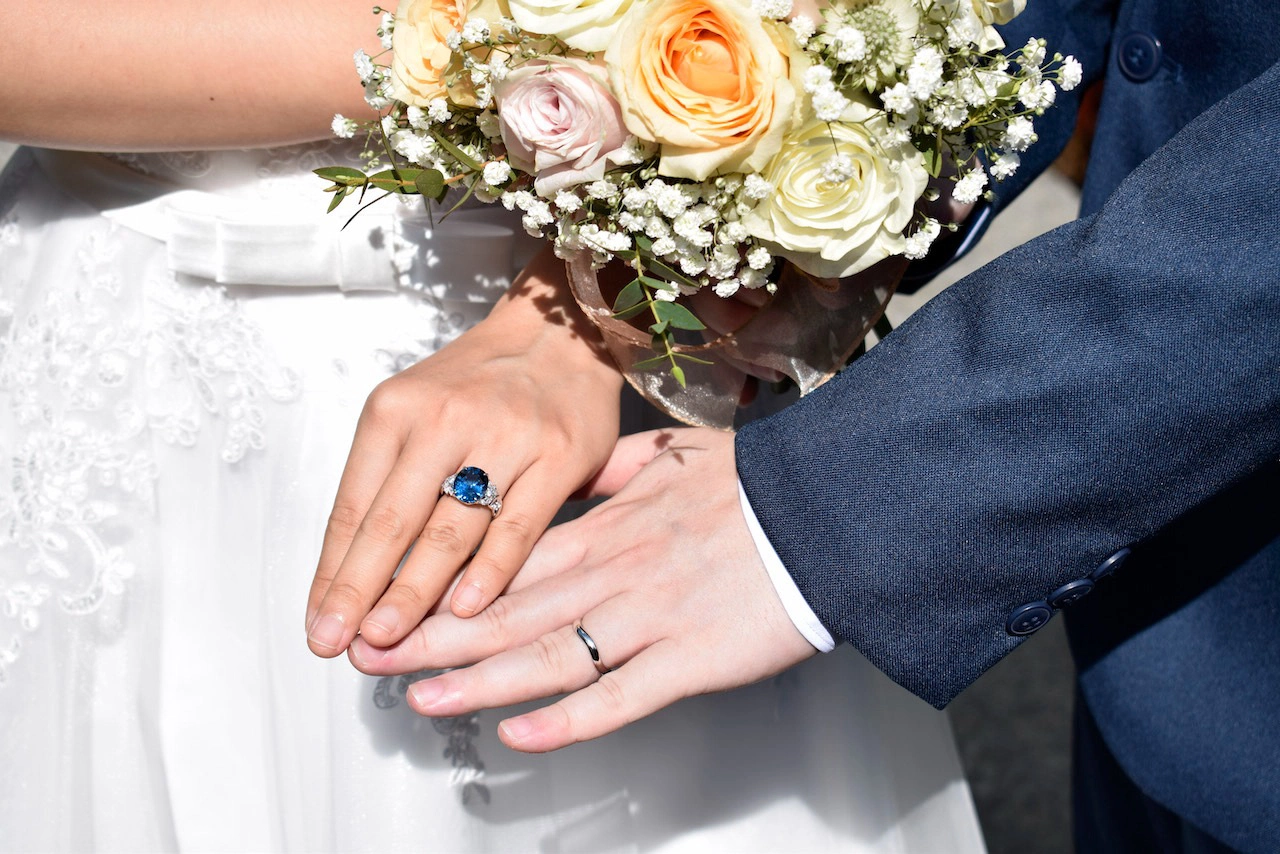
In Singapore, as in much of the world, both rings are typically worn on the fourth finger of the left hand. From there, the main decision is how they are arranged together.
There are several common approaches.
- Stacked in Order: The wedding band sits closest to the hand, with the engagement ring above it.
- Layered: Both rings are worn as a single stack, sometimes with additional bands added over time to mark an anniversary or milestone.
- Separated: Each ring is worn on a different hand for balance and flexibility.
There is no fixed rule. The right arrangement is usually determined through wear, not theory. Trying different configurations during a fitting often reveals how proportions and profiles interact in practice.
Choosing metals and settings is easier when both rings are viewed together. Book a consultation to see the options side by side.
How to Match Wedding Bands with Engagement Rings
Choosing a wedding ring in Singapore is a question of harmony. Because it is worn alongside the engagement ring, even subtle design decisions affect how the two sit together over time.
These are some of the key considerations.
What to Check | Why It Matters |
Metal | The wedding band can match the engagement ring or contrast it intentionally. Yellow gold, platinum, and rose gold each develop differently with wear over time. |
Profile | The height and shape of the band determine how closely it aligns with the engagement ring. A lower profile often allows for a more seamless fit. |
Contour | Certain engagement ring settings sit lower or extend beyond the finger line. In these cases, a curved or contoured band may be designed to follow its shape more precisely. |
Metal choice also carries practical implications. Platinum is dense and stable, holding its form over time. Gold alloys are softer and develop surface wear more readily. These differences become more visible with daily wear, particularly when both rings are worn together.
When possible, the engagement ring should be present during selection. Seeing both pieces side by side allows their proportions and alignment to be assessed directly. If not, precise measurements and photographs can serve as reference.
Popular Engagement Ring and Wedding Ring Styles
Engagement and wedding rings are often defined by a small number of enduring styles, each shaping how the ring sits, reflects light, and pairs with another band.
Gem Style
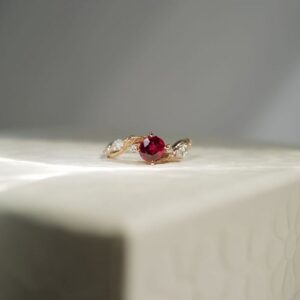
Solitaire
A single stone setting that places emphasis on proportion and silhouette. It remains one of the most classic engagement ring forms.
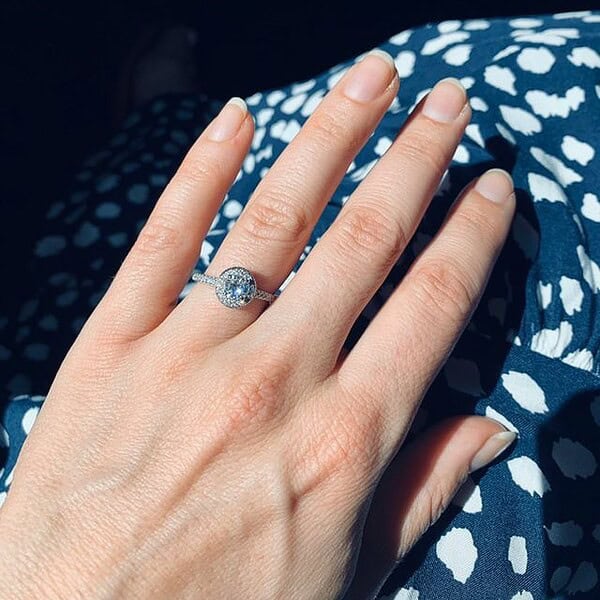
Halo
A central stone surrounded by smaller diamonds, creating additional brightness and visual scale.
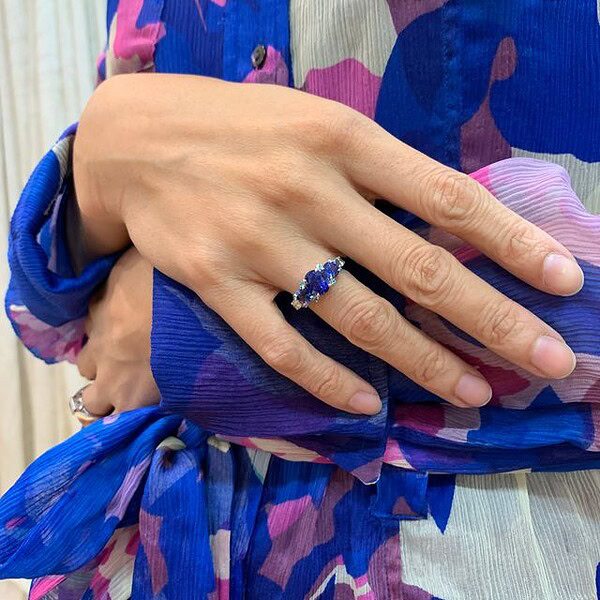
Three-stone
A central stone framed by two side stones, often chosen for its sense of balance and symmetry.
Band Styles
- Classic band: A plain, polished band with a focus on form and proportion.
- Diamond-set band: Small stones set along part or all of the band, adding subtle brilliance when worn alone or stacked.
- Eternity band: Diamonds encircling the entire ring, designed for continuous light from every angle.
- Contoured band: Shaped to sit closely against an engagement ring with a lower or unconventional setting.
These styles are often chosen not in isolation, but in relation to one another. The way they interact when stacked is as important as their individual design.
Designed as a Pair
When both rings are designed together, they are considered as a single composition rather than two separate pieces.
Commissioning bespoke rings together offers a few practical advantages:
- A closer, more considered fit between the two rings.
- Shared design details, from matching proportions to subtle engravings or concealed stones.
- Proportions, profiles, and metal choices resolved together rather than adapted after one ring has already been made.
Designing them as a pair allows for subtle alignment not only in form, but in how each piece frames the other when worn daily.
The Calla Lily Bespoke Process
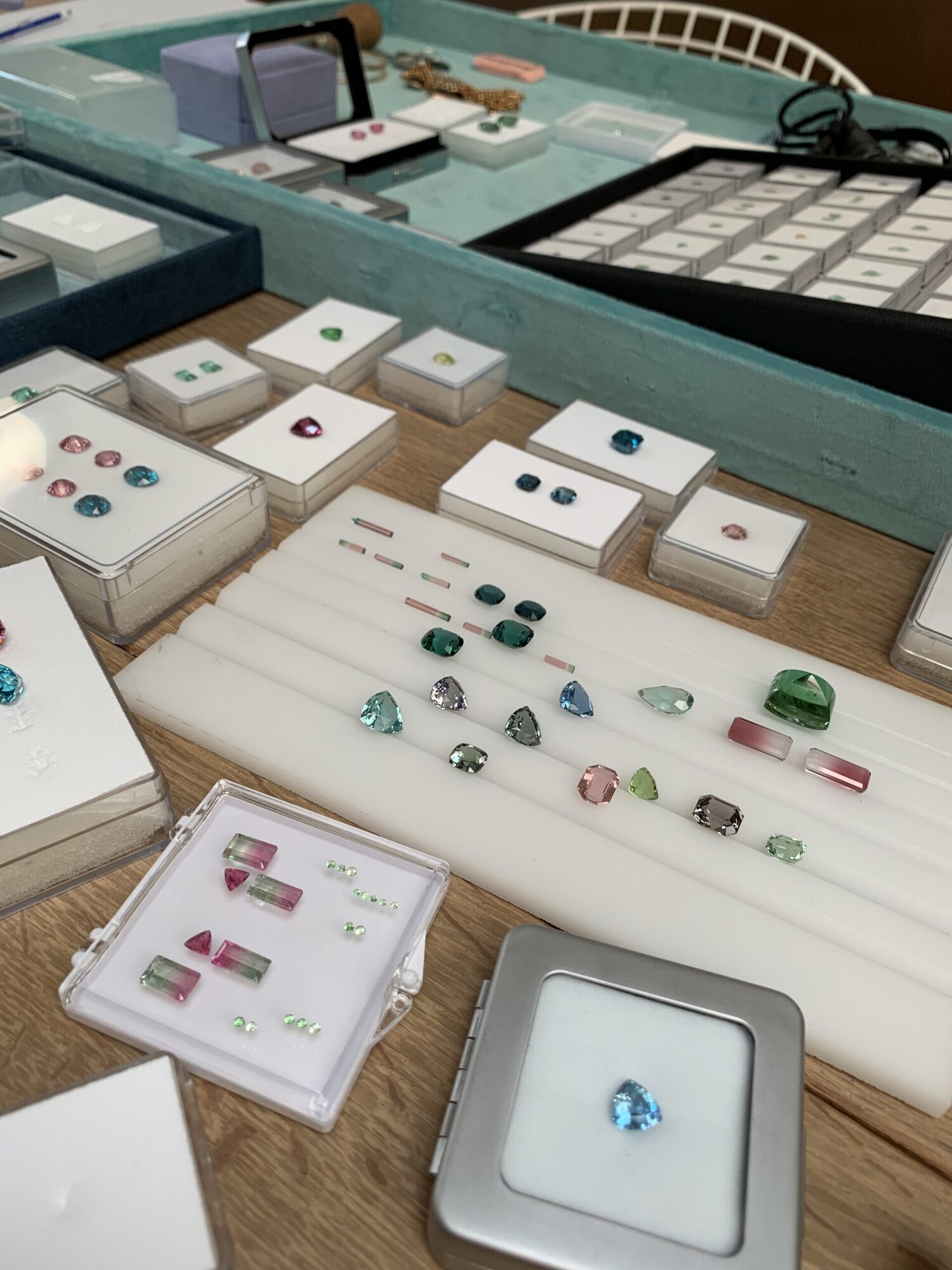
At Calla Lily, this process begins with a conversation about style, intention, and how the rings will be worn. Existing jewellery, heirlooms, or visual references often help define direction.
Gemstones and metals are then selected together, followed by sketches and refinements that consider both rings in parallel. Each decision informs the next, until both rings feel aligned.
Begin a bespoke consultation to design engagement and wedding rings shaped around your love story.
From Conversation to Creation
Every bespoke piece begins with a conversation.
The process is shaped by how the rings will be worn and what they are meant to reflect. From there, initial concepts are developed through sketches and material selection, with both rings considered in tandem.
For those ready to begin, the process starts with an initial consultation.
Book a consultation to explore how both rings can be designed together from the start.