Topaz is often pictured in one of two colours: golden yellow or bright blue. Yet few gemstones offer such a broad range of hues, from delicate champagne and peach to vivid orange, pink, red and violet. Some varieties are relatively accessible; others are exceptionally rare and sought after.
Recognised as one of November’s birthstones, alongside citrine, topaz offers far more than a single colour or familiar appearance. Its different varieties have distinct characteristics, treatments and considerations for wear. Understanding these differences makes choosing a topaz, whether for a birthday gift or a bespoke piece of jewellery, a more informed process.
1. A wider colour palette than you might expect
Topaz in its pure form is colourless. Trace elements and structural defects can give it colour, producing shades that include yellow, orange, pink, red, violet, brown and blue. The intensity varies considerably, from pale, almost transparent hues to deeply saturated colour.
Topaz in its purest form is colourless
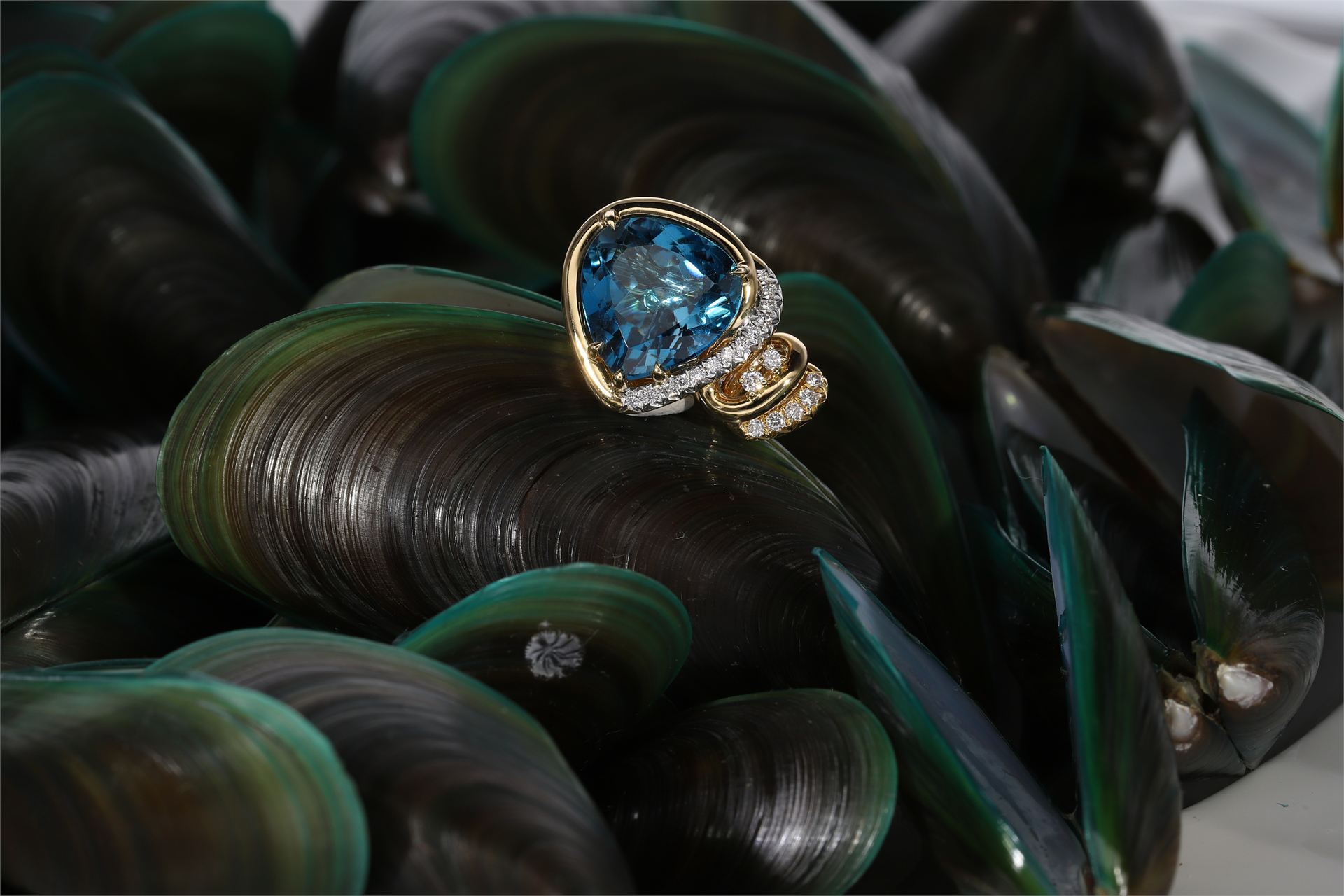
Blue topaz is among the most familiar varieties in contemporary jewellery. Its shades range from pale sky blue to deeper Swiss blue and London blue. Most blue topaz available today begins as colourless material that has undergone irradiation, sometimes followed by heat treatment. The resulting colour is generally stable under normal conditions.
Naturally occurring blue topaz is considerably less common. Treated blue topaz is not inherently a lesser choice, but the distinction matters when assessing rarity and value. Buyers should be told whether a gemstone’s colour is natural or treated.
Yellow and golden topaz offer a warmer spectrum, from pale champagne to honey and amber. Pink varieties can be delicate or strongly saturated, while naturally red topaz is exceptionally rare. The name topaz therefore covers a much wider range of appearances than its familiar blue and golden varieties might suggest.
2. Imperial topaz and its Brazilian origins
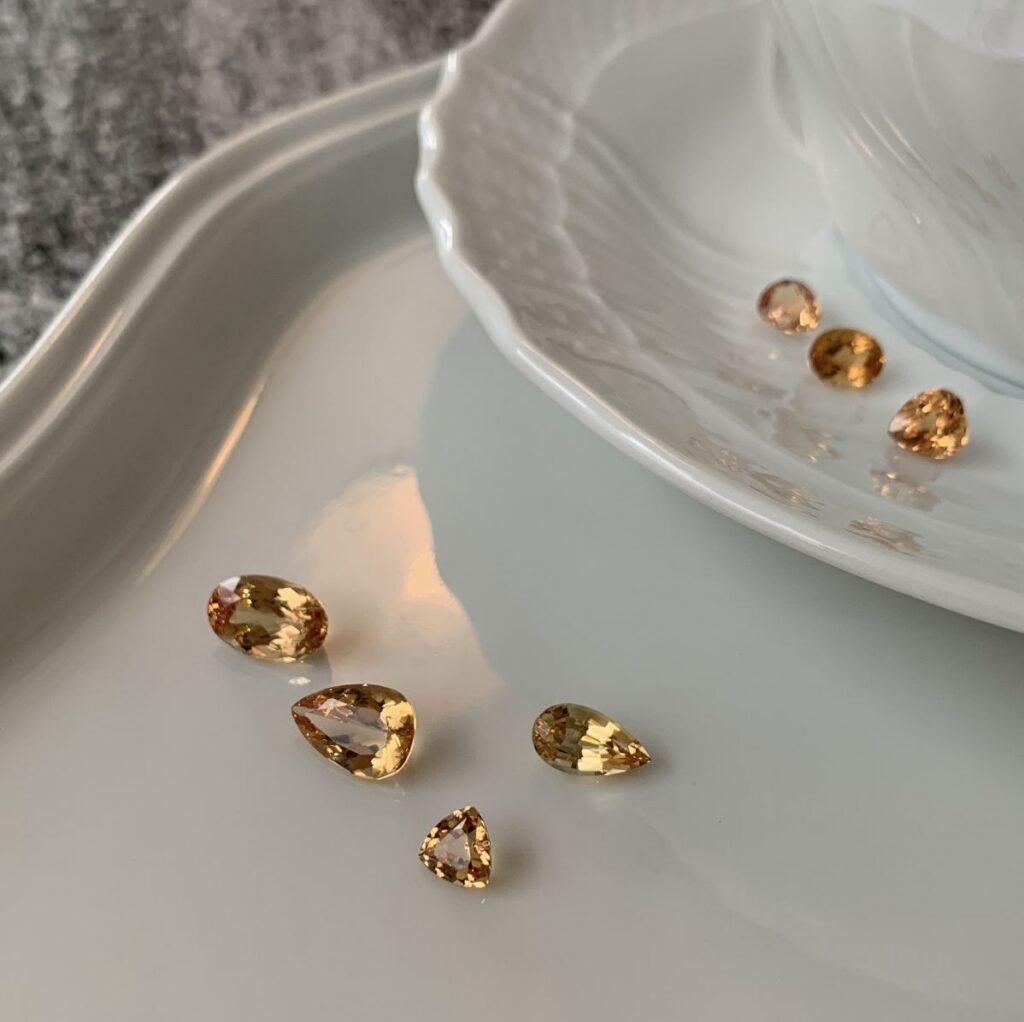
Imperial topaz in warm golden and peach hues
Among the recognised varieties, Imperial topaz is particularly sought after. Its colours range from golden yellow and peach to reddish orange and pinkish orange. Fine examples often have a strong, warm colour, sometimes with a noticeable pink or red undertone.
The Brazilian state of Minas Gerais is closely associated with Imperial topaz. The historic mining area around Ouro Preto has produced the gemstone for more than two centuries and remains one of its best-known sources. The region’s deposits have yielded some of the most celebrated examples of the variety.
Fine Imperial topaz is valued for its colour and relative scarcity. Hue, saturation, clarity, cut and carat weight all influence its desirability. Particularly vivid reddish-orange and pinkish-orange examples are among the most prized.
3. What gemstone treatments mean for topaz
Treatments are an important consideration when buying topaz, especially blue varieties. Much of the blue topaz available commercially begins as colourless material. Irradiation changes its colour, and heat treatment may then be used to produce or refine particular shades.
These are established processes in the gem trade. The resulting blue colour is generally stable, and treated blue topaz can be an attractive choice for jewellery. Its availability also makes a range of blue shades accessible at different price points. What matters when buying is knowing whether the colour is natural or treated.
Other treatments are used for different varieties. Heating can alter the colour of certain yellowish-pink topaz, intensifying its pink tones. Surface coatings create the rainbow-like effect sold as Mystic Topaz. Unlike colour changes produced within the gemstone, a coating sits on its surface. Abrasive cleaning or polishing can damage or remove it.
When considering a topaz, ask whether its colour is natural or treated and whether a surface coating has been applied. The answers will help establish the gemstone’s characteristics and the appropriate care it requires.
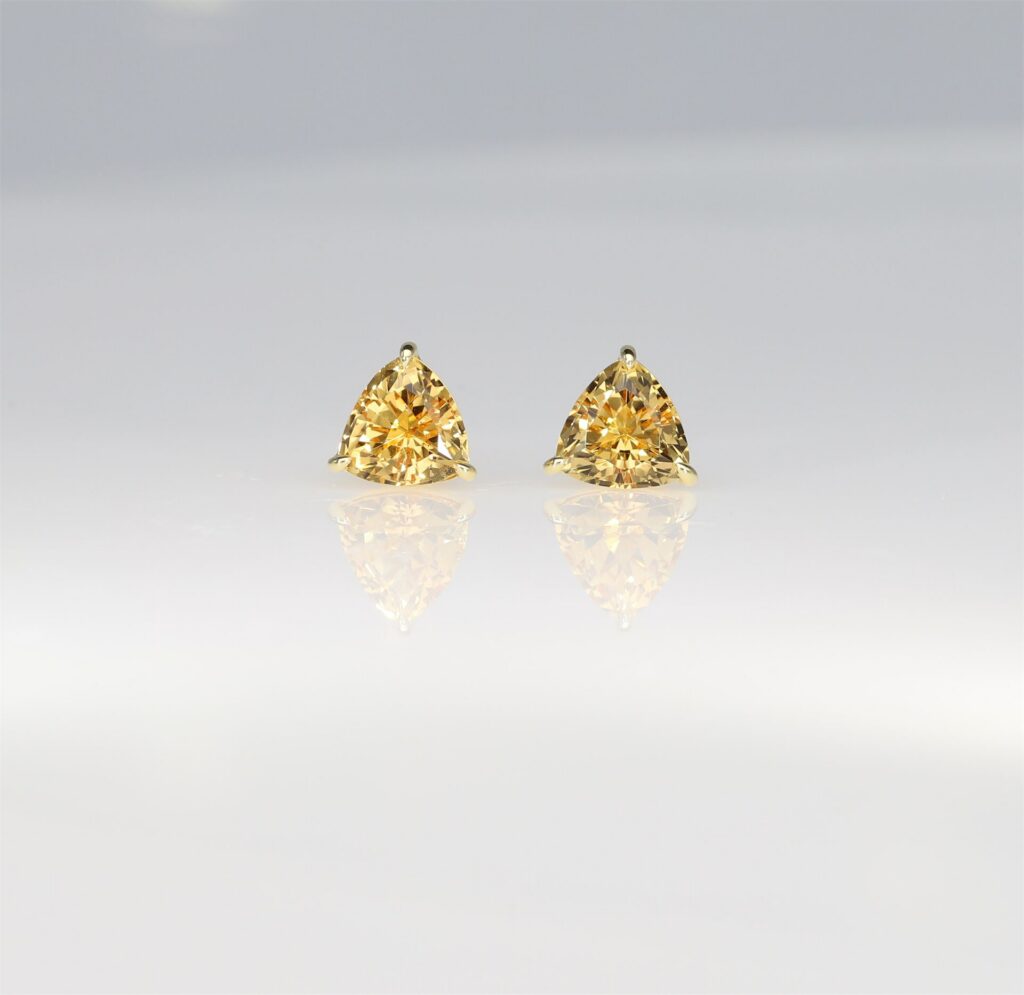
Gems that look like little suns
4. Choosing a topaz: colour, clarity and cut
Colour is often the first consideration, but it is worth looking at the gemstone as a whole. Four factors are particularly useful when comparing topaz.
Colour: Hue, tone and saturation all influence appearance. A pale champagne topaz and a vivid orange example may belong to the same broad colour family, but they create very different effects. With blue topaz, consider whether you prefer the lighter appearance of sky blue or the greater depth of London blue.
Clarity: Faceted topaz is often relatively free of visible inclusions, particularly in blue, colourless and yellow varieties. Inclusions may be more noticeable in some rarer colours. Their significance depends on their size, position and effect on transparency.
Cut: Topaz is fashioned into many shapes, including oval, cushion, pear, emerald, round and marquise cuts. Its clarity and lustre make it well suited to faceting, but proportions influence how light travels through the gemstone and how its colour appears. The cut should complement the individual gem’s dimensions and colour, as well as the design in which it will be set.
Carat weight: Topaz can occur in large crystals, making sizeable faceted gemstones possible. A higher carat weight, however, does not automatically mean greater value. Colour, rarity, clarity and cut remain important considerations.
5. Hardness, cleavage and everyday wear
Topaz ranks 8 on the Mohs scale of mineral hardness, making it relatively resistant to scratching. There is, however, an important distinction between hardness and toughness. A gemstone can resist scratches and still be vulnerable to impact.
Topaz has perfect cleavage in one direction. Under sufficient force, it can split or chip along this plane. A sharp knock or pressure in the wrong place can therefore damage a topaz, despite its relatively high hardness.
This is an important consideration when designing a piece of jewellery. The setting should secure the gemstone without placing unnecessary stress on vulnerable areas. Exposed corners and edges may need additional protection, particularly in rings intended for frequent wear. A pendant or pair of earrings is generally less exposed to the knocks a ring encounters during everyday activities.
Topaz is best cleaned with warm water, mild soap and a soft brush. Steam and ultrasonic cleaners should be avoided. High heat and sudden temperature changes can cause internal fractures. Prolonged exposure to heat or sunlight may also affect the colour of some yellow-to-brown varieties.
6. Two topaz necklaces by Calla Lily Fine Jewellers
Topaz’s colour range allows for very different approaches to jewellery design. Two bespoke necklaces by Calla Lily Fine Jewellers illustrate this particularly well: one incorporates gemstones with an existing personal history, while the other centres on the colour and setting of a single topaz.
The first was commissioned by a father as a gift for his daughter. The necklace incorporates the client’s own blue topaz and jade, bringing both gemstones into a white-gold design with polished and matte finishes. Its lower chain is detachable, allowing the necklace to be worn at different lengths. The jade pendant can also be removed and replaced with another gemstone of choice.
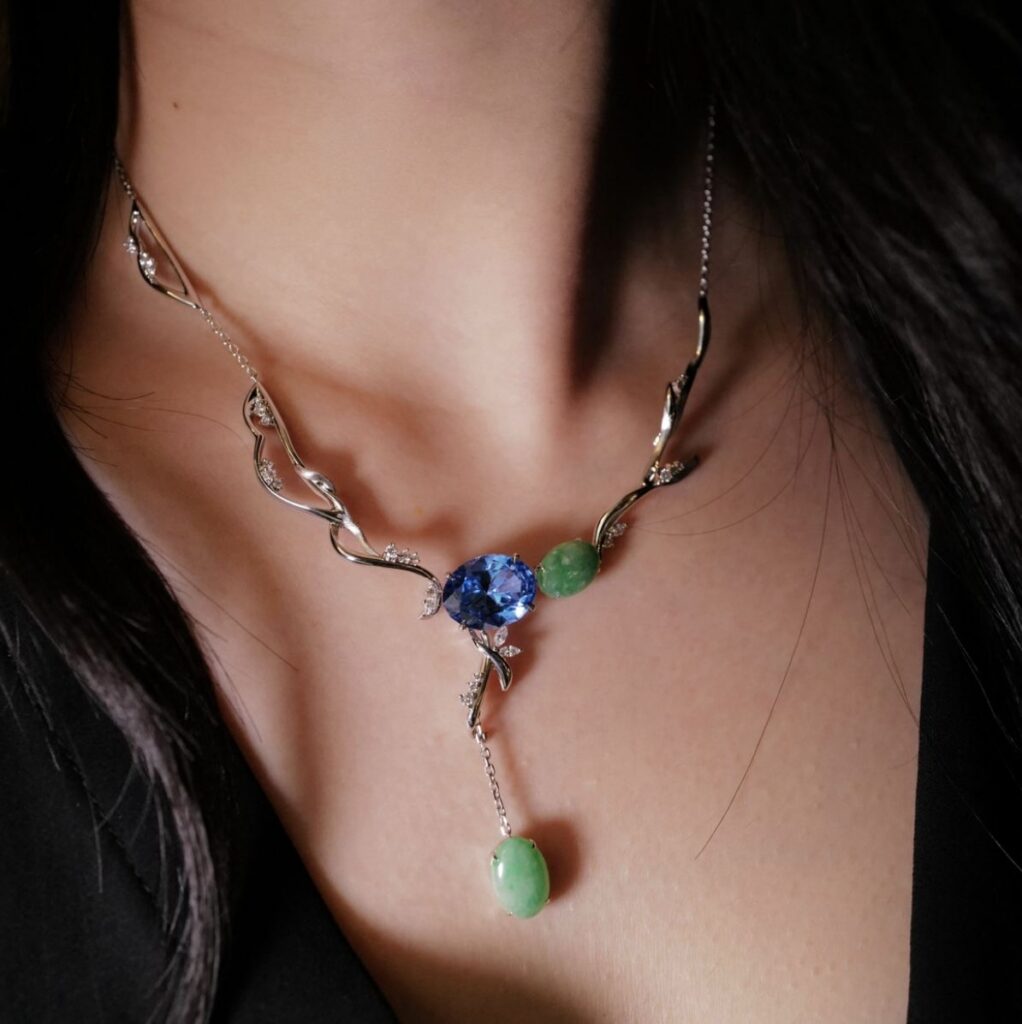
A bespoke white gold necklace set with the client’s own blue topaz and jade
The commission began with gemstones the family already owned, giving the finished necklace a personal history from the outset. Its adaptable construction also allows the wearer to change the length and pendant according to preference.
A second necklace takes a more architectural approach. Its centrepiece is a beautifully faceted topaz in a lemon-honey hue, framed by a linear setting combining black and yellow gold. The rectangular gemstone sits within a geometric arrangement of contrasting gold tones, creating a distinctive outline around its pale yellow colour. Made as a one-of-a-kind piece, the pendant demonstrates how the setting can influence the character of a gemstone.
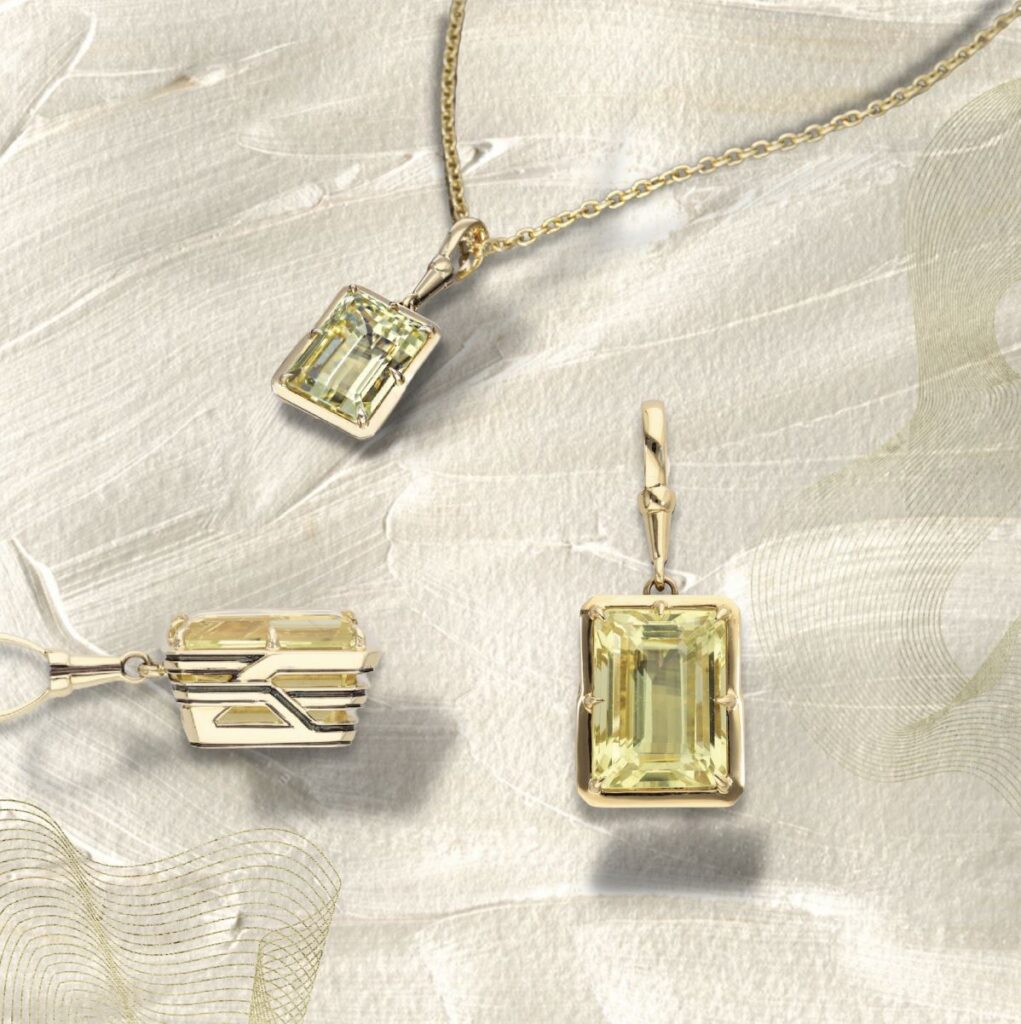
A lemon-honey topaz framed in black and yellow gold
The two necklaces show different possibilities for working with topaz: transforming gemstones already owned by a client, or beginning with a particular gem and developing a design around its colour and proportions.
Topaz and the November birthstone tradition
Topaz and citrine are both recognised as November birthstones. Although their colours can overlap, particularly in yellow and golden varieties, they are different minerals. Topaz is an aluminium silicate mineral containing fluorine and hydroxyl, while citrine is a yellow variety of quartz.
The association between gemstones and birth months has evolved over centuries, with different traditions assigning particular meanings to individual gems. Topaz has historically been associated with strength and protection, among other symbolic qualities. These associations belong to the cultural history of the gemstone, rather than its scientific properties.
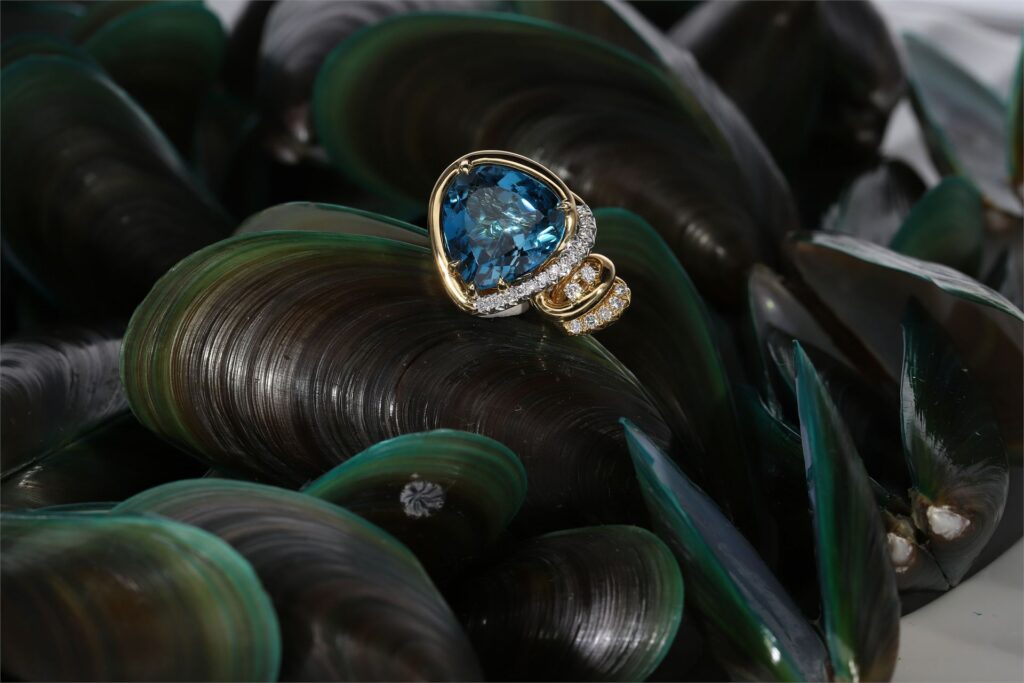
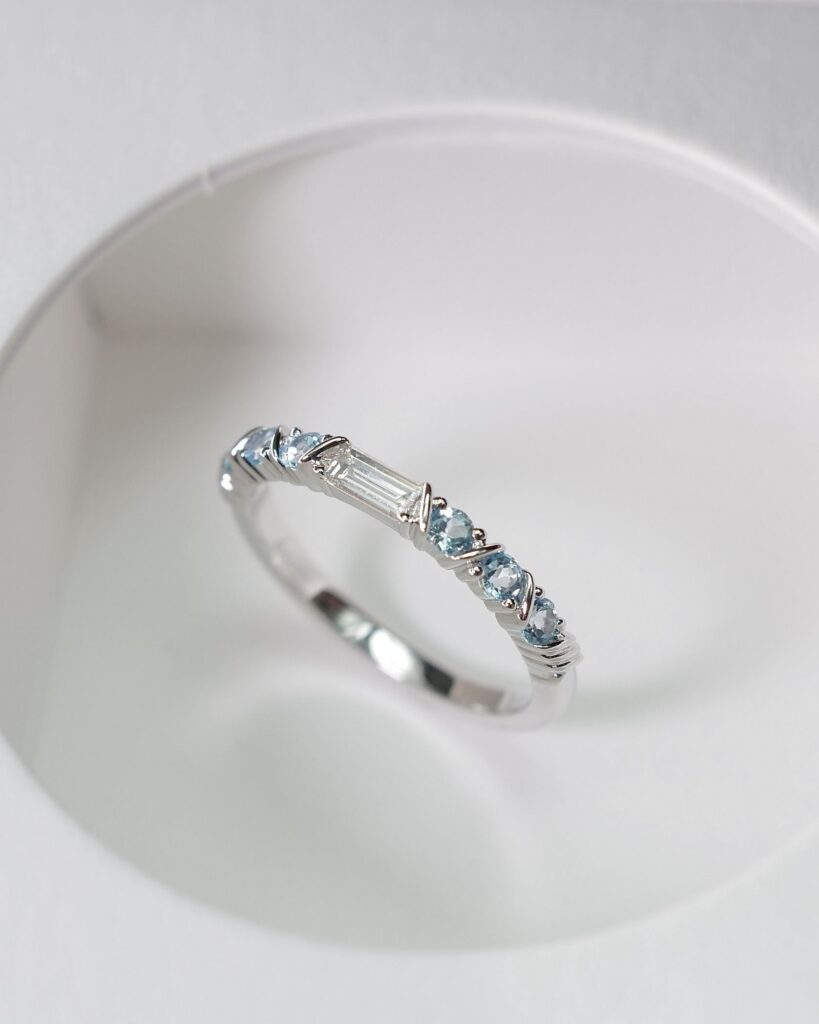
Swiss Blue Topaz Ring
For a November birthday, topaz offers a wide choice of colours, from warm golden and orange hues to pink and blue. The birthstone tradition provides a starting point; the individual gemstone’s colour and character can make the selection much more personal.
At Calla Lily Fine Jewellers, clients can commission new designs using gemstones they already own, including gems from older pieces of jewellery, or explore options for a new creation. Whether you have a topaz you would like to reset or are considering a new gemstone, the atelier can help develop a piece around your preferences and the practical requirements of the design.