Summary:
- The Mohs hardness scale measures scratch resistance, but hardness alone does not determine a gemstone’s durability.
- Gemstone durability depends on hardness, toughness, and stability, which affect how a stone should be worn and cared for.
- Tanzanite ranks 6 to 7 on the Mohs scale. Despite its susceptibility to scratches and impact, it is considered high jewellery for its rare origin and distinctive blue-violet hues.
The Mohs Scale for Gemstone Hardness: Is Tanzanite Durable?
In the foothills of Mount Kilimanjaro, in 1967, a Masai tribesman discovered a cluster of crystals that were unlike anything the surrounding land had produced before. They were transparent, intense, and violet-blue in a way that shifted as the light moved across them. No one was certain what they were.
The gem that eventually took the name tanzanite has since been found in only one place on earth: a narrow belt of hills in northern Tanzania, a few kilometres long. Within a single tanzanite crystal lies an interplay of blue, violet, and burgundy, each hue revealing itself as the stone is viewed from another angle.
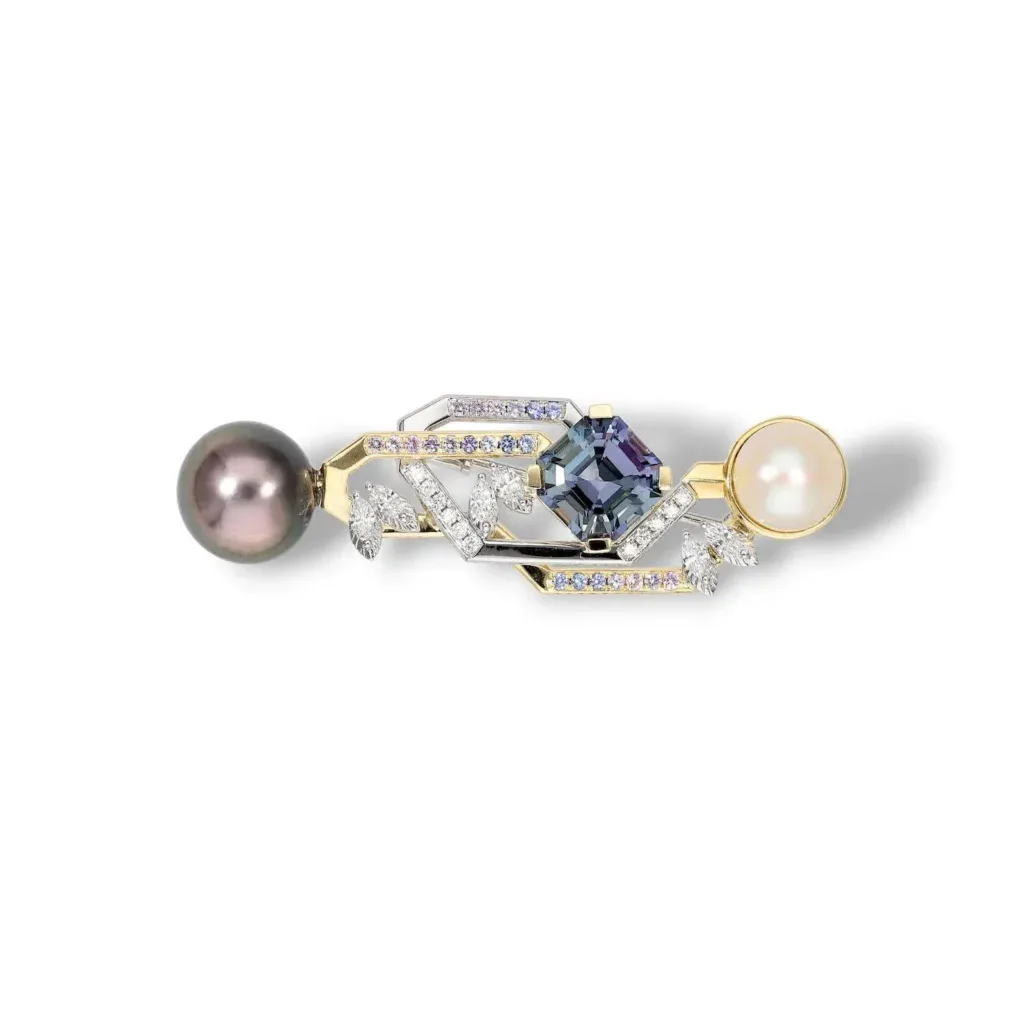
However, there is more to tanzanite than the beauty that first draws the eye. With a hardness rating of 6 to 7 on the Mohs scale, tanzanite is more susceptible to scratches than sapphire, which ranks at 9. But hardness alone does not determine a gemstone’s durability or suitability for fine jewellery.
What, then, should you consider when choosing a gemstone?
What Does the Mohs Scale Actually Measure?
In 1822, the mineralogist Friedrich Mohs devised a simple system for comparing minerals: drag one across the surface of another. The mineral that leaves a scratch is harder than the one that receives it.
He arranged 10 minerals in sequence, from talc at 1 to diamond at 10, creating a scale that gemmologists still use today.
The Mohs hardness scale measures scratch resistance. A gem below 7 is vulnerable to abrasion from quartz, a component of ordinary dust and grit. Below 5, surface wear becomes more pronounced.
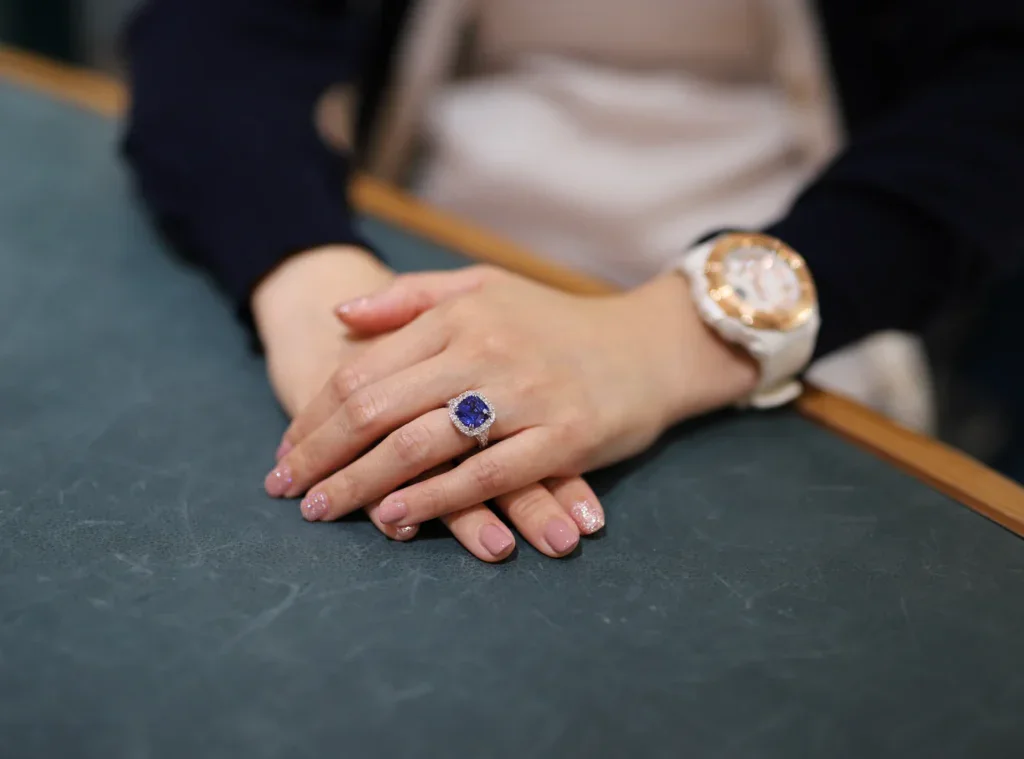
This matters for jewellery worn on the hands, which come into contact with hard surfaces constantly. A ring stone that accumulates surface scratches over years will eventually lose the sharp polish that makes it brilliant under light.
Hardness, Toughness and Stability: The Three Parts of Durability
Diamond sits at 10, making it the hardest natural mineral known. Yet a precise blow in the right direction can cleave a diamond cleanly in two. This apparent contradiction illustrates why gemstone durability has three components:
- Hardness
- Toughness
- Stability
No single number captures them all.
Hardness: Resistance to Scratches
Unlike a conventional numerical scale, the steps on the Mohs hardness scale for gemstones are not equal. The difference between 9 and 10 is greater than the numbers suggest. Here’s a comparison table for reference:
|
Stone |
Mohs Hardness |
|
Diamond |
10 |
|
Ruby |
9 |
|
Sapphire |
9 |
|
Topaz |
8 |
|
Quartz |
7 |
|
Tanzanite |
6–7 |
Corundum, which includes ruby and sapphire, can scratch topaz, quartz, and softer minerals. Diamond, however, is harder still. This distinction helps explain why gemstones with relatively close Mohs ratings can behave differently when exposed to everyday abrasion.
Toughness: Resistance to Chipping and Breaking
Gemstone toughness describes how well a gem withstands impact. It depends on the crystal’s internal structure, including how its atoms bond and whether it has natural planes along which it can split under force. These planes are known as cleavage.
Nephrite jade offers a striking example. Measuring around 6 to 6.5 on the Mohs hardness scale, it is softer than many familiar gemstones, yet ranks among the toughest gem materials. Its interlocking fibrous structure resists fracture with exceptional tenacity.
Ancient cultures fashioned jade into tools precisely because it could withstand impacts that would shatter more brittle materials.
Stability: Resistance to Heat, Light and Chemicals
Stability describes how a gemstone responds to its environment. Different materials are vulnerable to different conditions:
- Rapid temperature changes can cause internal fractures, a phenomenon known as thermal shock.
- Prolonged ultraviolet exposure may cause certain gemstones to fade or change colour.
- Very low humidity can cause some opals to lose moisture and develop fine internal cracks.
- Perfumes, cleaning products, and cosmetics may damage or discolour susceptible gemstones, particularly porous materials.
Together, all three properties determine gemstone durability.
Tanzanite on the Durability Test
Whether tanzanite is durable depends on which part of durability you are measuring. Its beauty is accompanied by physical characteristics that require particular consideration when designing and wearing jewellery.
How Hard Is Tanzanite?
When assessing tanzanite hardness, the Mohs rating of 6 to 7 indicates susceptibility to gradual surface abrasion. For a ring worn daily, this is a practical limitation. It matters less in pendants, brooches, and earrings, which generally encounter fewer hard surfaces during ordinary wear.
Toughness and Cleavage: What a Hard Knock Can Do
Tanzanite has perfect cleavage in one direction, making it vulnerable to splitting along a natural plane if struck at a particular angle.
This characteristic is not unique to tanzanite. Topaz, despite ranking higher at 8 on the Mohs hardness scale, also has perfect cleavage and requires careful handling.
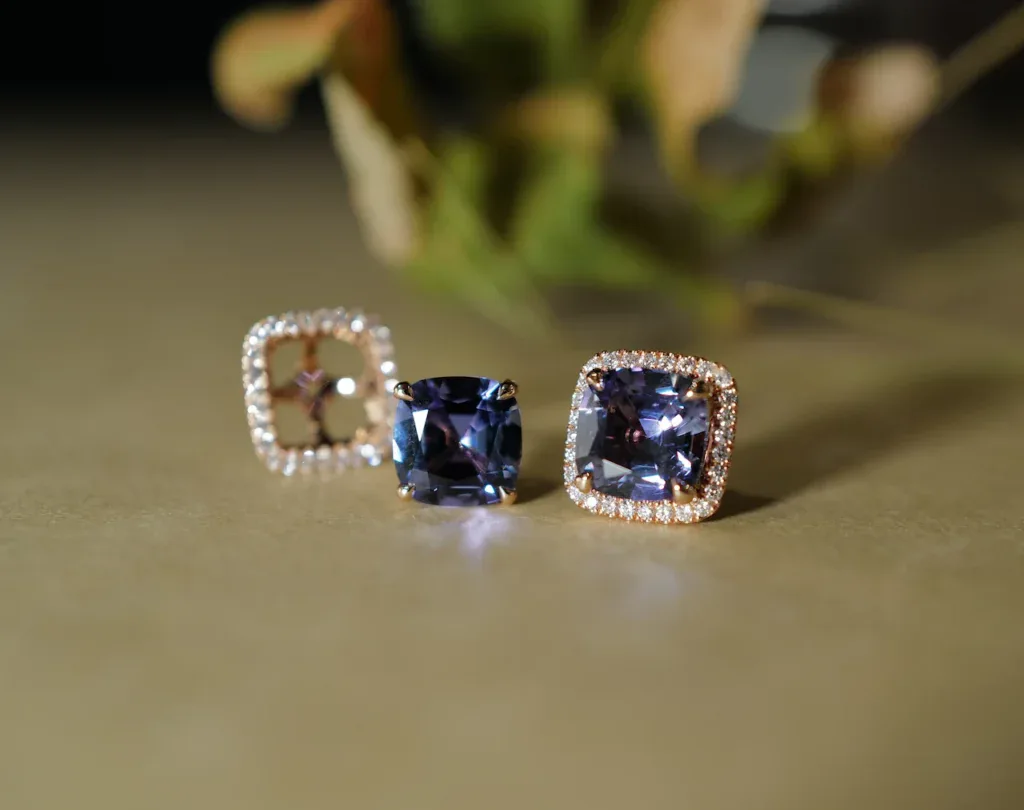
For a jeweller, the challenge is to account for this directional vulnerability when designing the mount, particularly around exposed edges and corners.
Why Heat and Sudden Temperature Changes Are a Risk
Tanzanite is sensitive to rapid temperature changes. Ultrasonic and steam cleaners are not recommended, as vibration and thermal stress can damage the stone.
Cleaning methods suitable for harder, more stable gemstones such as sapphire and ruby may therefore be inappropriate for tanzanite.
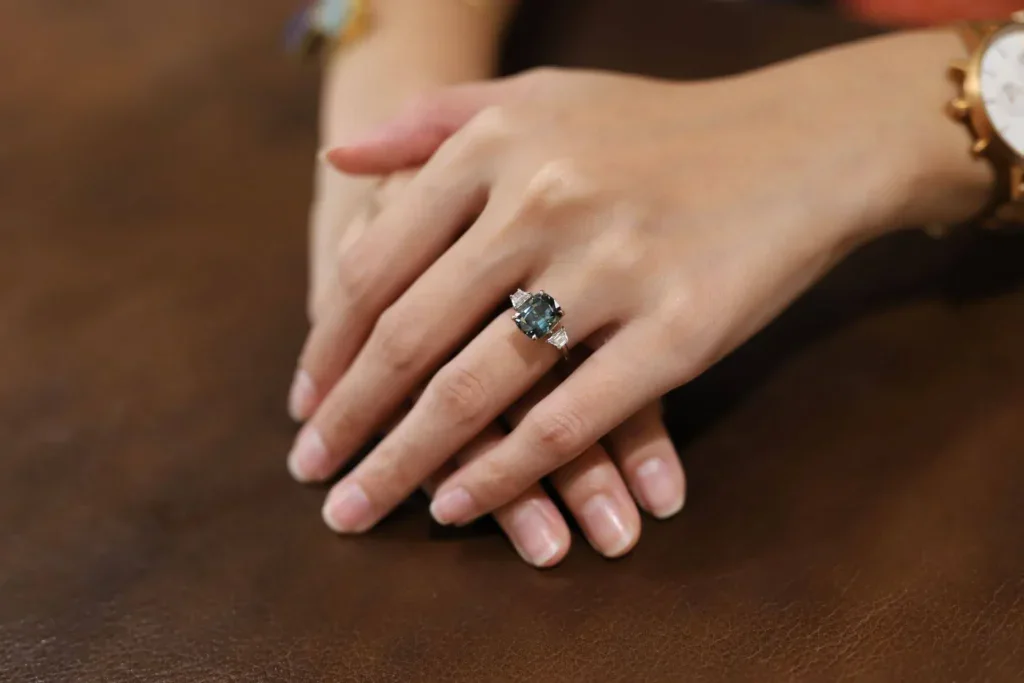
What a Competent Jeweller Does Differently with a Softer Gem
From setting the stone securely to bringing out its distinctive colour, several considerations shape the finished piece.
- Setting expertise. With tanzanite, the craftsman’s skill in setting the stone matters as much as the design itself.
- Prong placement and shape. Exposed corners and pointed edges require particular attention. V-shaped prongs can provide greater coverage than round ones in these vulnerable areas.
A cutter’s decision about orientation determines the dominant face-up colour. Producing a violet-purple face-up colour generally wastes less rough than achieving a violetish blue, which is why violet-purple stones are more commonly available.
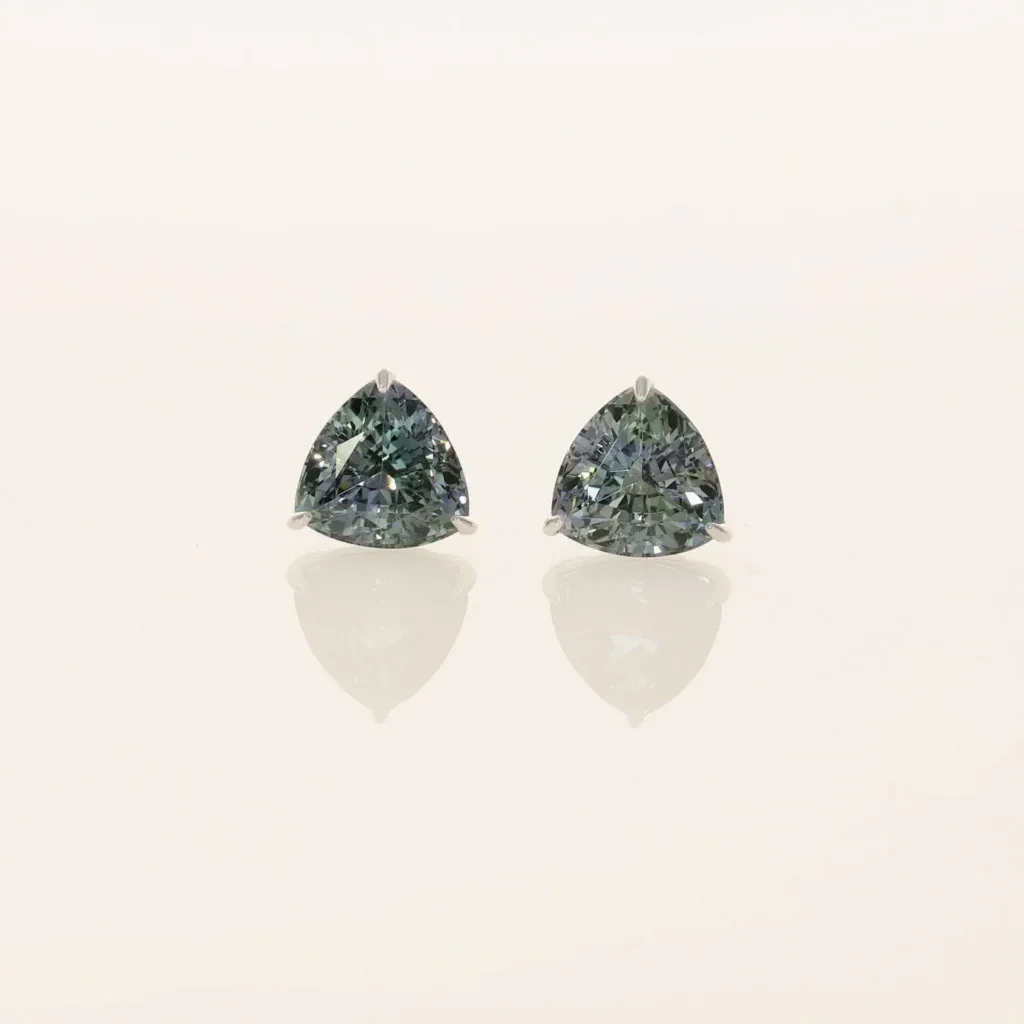
Beyond weight and colour, a gemstone’s optical and physical characteristics shape the finished piece. At Calla Lily, these considerations guide our bespoke process. Make an appointment to explore a design around your tanzanite, or an idea you have in mind.
How to Care for Softer Gemstones at Home
A few thoughtful habits can help preserve tanzanite’s appearance and condition over time.
- Clean with warm water, mild soap, and a soft brush.
- Avoid ultrasonic and steam cleaners.
- Store separately from harder gemstones, such as diamonds and sapphires, in an individual pouch or lined compartment.
- Remove tanzanite rings before gardening, cooking, cleaning, or exercising.
- Arrange regular professional inspections to check the prongs and security of the stone.
An annual maintenance check helps preserve the beauty, integrity, and longevity of your piece.
Does Hardness Really Decide Which Gem Is Right for You?
Tanzanite’s appeal lies in qualities that no hardness rating can express. Its limited geographic origin, remarkable optical behaviour, and the rarity of fine specimens distinguish it from more durable gemstones.
The finest examples, displaying saturated violetish blues and generally weighing above five carats, are particularly uncommon. For collectors, these qualities may outweigh the practical demands of owning a softer stone.
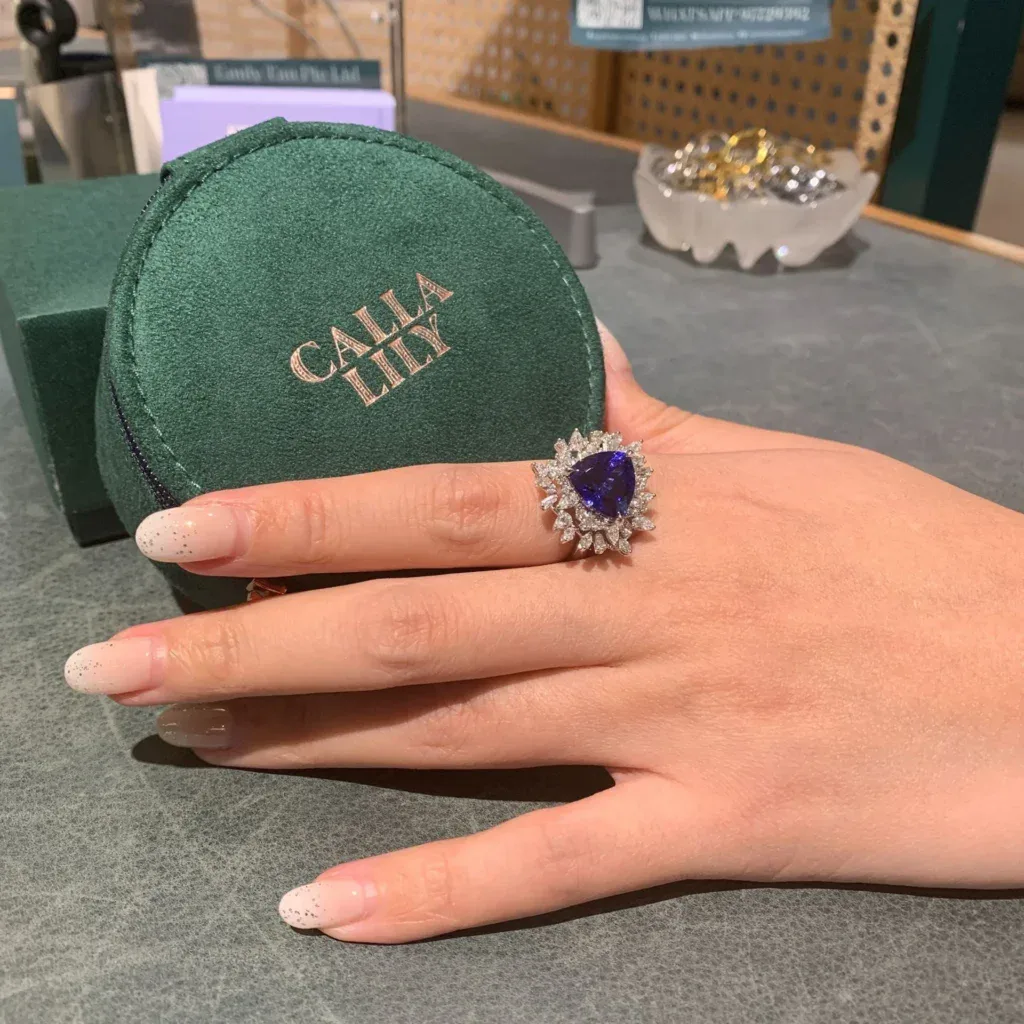
Gemmological tools can measure hardness, toughness, and stability. They cannot measure the fascination of a particular stone held to the light, revealing a colour that changes with the slightest movement.
Tanzanite’s true worth is only appreciated by those who understand the intricacies behind its beauty. If you would like to explore what that looks like in a piece designed around your stone and how you wear it, start the conversation with Calla Lily.
Frequently Asked Questions
Is tanzanite suitable for an engagement ring?
Yes, tanzanite can be used in an engagement ring, provided it has a protective setting and is worn with care. Its Mohs hardness of 6 to 7 and perfect cleavage make it more vulnerable to scratches and impact than sapphire or ruby. Removing the ring during high-impact activities and arranging regular setting checks can help preserve it.
Does a softer gemstone cost more to set?
Not necessarily, as the cost depends on the design’s complexity. Gemstones with pronounced cleavage require careful handling during mounting to avoid damage. At Calla Lily, we discuss the setting approach during your complimentary first consultation.
What should I do if my tanzanite chips?
Stop wearing the piece and have a jeweller assess the damage. Depending on the chip’s location and severity, the stone may be recut at the expense of some carat weight, or replacement may be more practical.
How often should the setting on a tanzanite ring be checked?
We recommend annual setting checks, or twice a year for a ring worn daily. We will inspect the prongs, stone security, and overall condition of the mount to identify potential damage.
Can Calla Lily reset a tanzanite from an old piece of jewellery?
Yes, we can assess your existing tanzanite and advise on a suitable new setting. We can also incorporate existing gemstones and metals into a new design. Get in touch to arrange an appointment at our Tiong Bahru atelier.